
At Providence Dental Care, technology is used with a clear purpose: to help our team understand what is happening more precisely, explain findings more clearly, and make treatment more efficient and predictable for patients. Rather than relying on technology simply because it is new, we incorporate tools that improve diagnosis, planning, communication, comfort, and long-term care.
For patients visiting our office for routine dentistry, restorative treatment, implants, orthodontic care, or periodontal therapy, these systems allow us to gather more complete information and create a more individualized approach. Our investment in advanced dental technology reflects the standard of care we want families in Mt. Juliet, TN to experience at every stage of treatment.
AI-Assisted Dental Diagnostics
Dental x-rays contain a tremendous amount of information, but some changes can be subtle, particularly in their earliest stages. AI-assisted diagnostic technology gives our team another layer of information when reviewing dental images.
The software can help highlight areas that may warrant closer evaluation, such as possible decay, changes in bone levels, or other findings visible on x-rays. It does not replace the judgment of the doctor. Instead, it serves as an additional diagnostic resource that can help support a more thorough review.
This technology can also make conversations easier for patients. When an area of concern can be visually identified and discussed on the screen, patients can better understand what the doctor is seeing and why a particular recommendation may be appropriate.
Our goal is not simply to identify problems. We want patients to understand their oral health well enough to make informed decisions about whether treatment should be completed now, monitored over time, or approached in another way.


Digital Scanning
Traditional impressions can be uncomfortable, particularly for patients with a strong gag reflex or those who have difficulty sitting with impression material in their mouth. Digital scanning provides a different approach.
Using a small handheld scanner, our team can capture detailed three-dimensional images of the teeth and surrounding structures. These digital models can be used for restorative treatment, orthodontic planning, bite analysis, appliances, and other procedures that require an accurate representation of the mouth.
Digital scans also allow us to evaluate details that can sometimes be difficult to communicate with a traditional impression alone. We can enlarge the image, rotate the model, and review areas of the mouth from multiple perspectives.
Benefits of digital scanning may include:
- Digital impressions can eliminate the need for traditional impression material in many situations.
- Detailed three-dimensional models can support more precise restorative and orthodontic planning.
- Scans can be stored digitally and compared over time when clinically appropriate.
- Patients can view their own teeth on screen and better understand the recommendations being discussed.
CEREC® & Same-Day Restorative Technology
When a tooth needs a crown or certain other restorations, traditional treatment often involves multiple appointments, temporary restorations, and time spent waiting for a dental laboratory to complete the final restoration.
CEREC technology allows us to complete selected restorations directly in our office using a digital workflow. After the tooth is prepared, a digital scan captures its shape, neighboring teeth, and bite. The restoration can then be digitally designed and created from a high-quality dental material.
For appropriate cases, this can allow the tooth to be restored in a single visit.
The advantage is not simply convenience. Keeping the design, fabrication, and placement process within the same digital workflow gives the doctor greater control over how the restoration fits, functions, and relates to the surrounding teeth.
Not every restoration should necessarily be completed the same day. Some complex or highly customized cases may still benefit from collaboration with a dental laboratory. Our team evaluates each situation individually and recommends the approach that best fits the clinical needs of the patient.


CBCT & Three-Dimensional Imaging
Two-dimensional dental x-rays are extremely useful, but certain treatments require a more comprehensive view of the teeth, bone, nerves, sinuses, and surrounding anatomy.
Cone beam computed tomography, often called CBCT, creates detailed three-dimensional images that allow the doctor to examine these structures from multiple angles. This additional information can be especially valuable when planning dental implants, evaluating impacted teeth, investigating complex dental concerns, or assessing anatomy that may not be fully visible on a traditional x-ray.
For implant dentistry, CBCT imaging can help evaluate the height, width, and position of available bone before treatment begins. It can also help identify important anatomical structures that need to be considered when determining implant placement.
Three-dimensional imaging can make treatment planning more deliberate because the doctor is working with a more complete picture of the patient’s anatomy rather than relying solely on a flat image.
SprintRay® 3D Printer
Three-dimensional printing has expanded what can be created within a modern dental office. Providence Dental Care uses digital printing technology to support treatment planning and the fabrication of selected dental appliances and models.
Once a digital scan or design has been completed, three-dimensional printing can transform that digital information into a precise physical object. Depending on the treatment, this technology may be used to create models, surgical guides, temporary restorations, appliances, or other components used during care.
Keeping more of the digital workflow within our office can help streamline treatment and reduce the number of outside steps required for certain procedures.
For patients, this can mean a more connected process. Digital scans, treatment planning, design, and fabrication can work together rather than existing as separate stages handled through multiple systems.


SureSmile® & Remote Orthodontic Monitoring
Orthodontic treatment requires more than delivering aligners and waiting for the teeth to move. Progress needs to be monitored so the doctor can determine whether treatment is developing as planned.
Remote monitoring technology allows selected orthodontic patients to provide progress information between office visits. Patients can submit guided images from home, giving our team an additional way to evaluate aligner fit and tooth movement.
This does not eliminate the need for in-person care. Instead, it can complement office visits and help the doctor determine when a patient needs to return for a closer evaluation.
Remote monitoring may be especially helpful for keeping treatment organized and identifying concerns earlier rather than waiting until the next scheduled appointment. It can also reduce unnecessary visits when treatment is progressing appropriately.
For patients balancing work, school, family responsibilities, and appointments, this technology creates a more flexible way to stay connected to their orthodontic care.
Guided Implant Surgery
Dental implant placement depends heavily on careful planning. The final restoration has to look and function properly, but the implant itself must also be positioned appropriately within the available bone while accounting for neighboring teeth and important anatomical structures.
Guided implant surgery combines digital scans, CBCT imaging, virtual treatment planning, and three-dimensional fabrication to create a highly coordinated approach.
Before surgery, the doctor can virtually evaluate implant position and determine how the proposed restoration will relate to the patient’s anatomy. A customized surgical guide may then be created to help transfer that digital plan to the mouth during implant placement.
This approach can improve the consistency between the treatment that is planned digitally and what occurs during the surgical appointment.
The technology does not replace clinical judgment or surgical experience. It gives the doctor more detailed information before treatment begins and provides another tool for carrying out the plan accurately.
For patients considering implant restoration at Providence Dental Care, this digital planning process helps us approach treatment with a strong understanding of both the surgical and restorative goals.

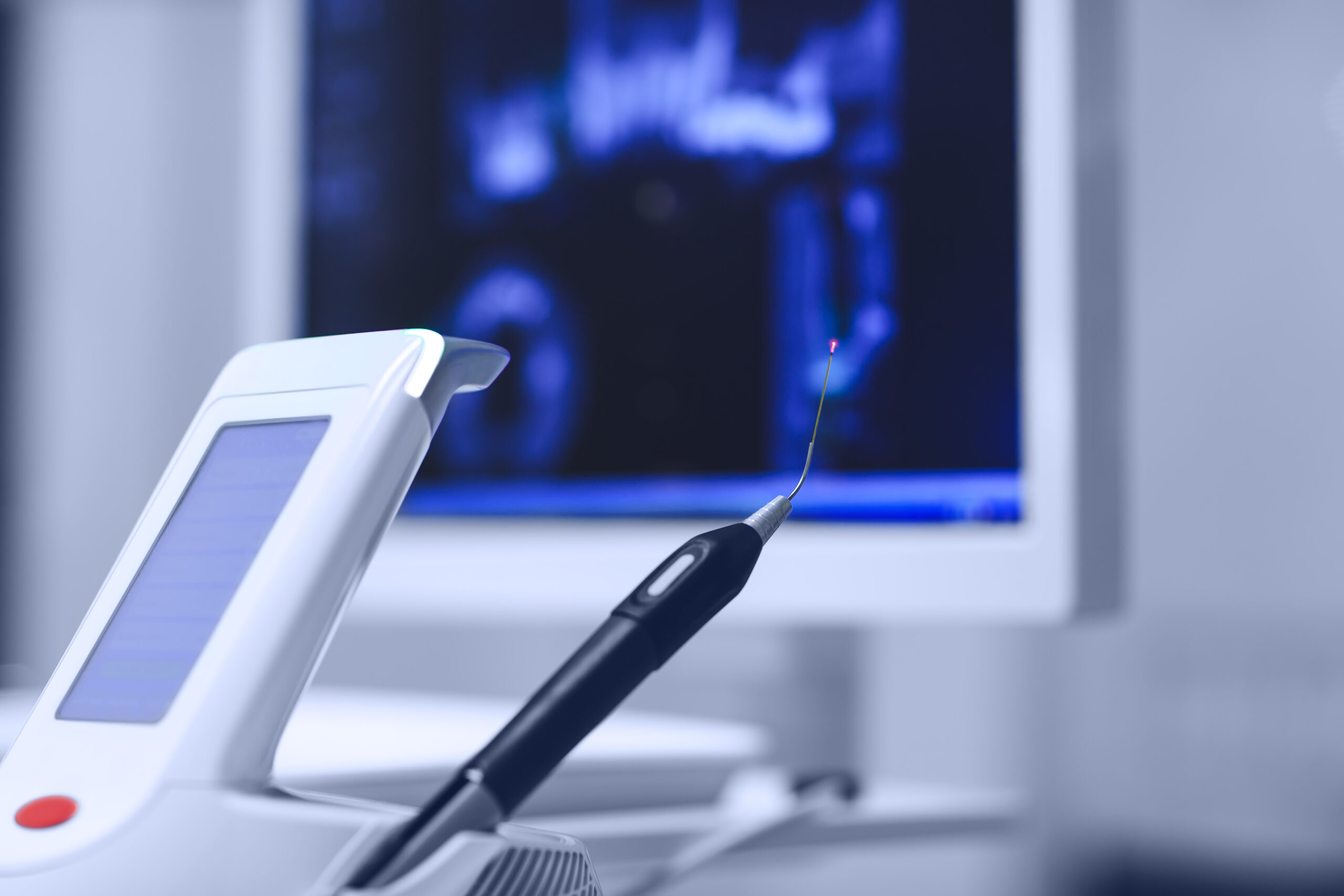
Laser Dentistry
Dental lasers allow our team to perform certain procedures with a highly focused form of energy that can interact with soft tissue in a controlled manner.
Depending on the procedure, laser technology may be incorporated into periodontal treatment, soft-tissue contouring, management of inflamed tissue, or other areas of dental care. Because the laser can target specific tissue, it can provide excellent visibility and precision during treatment.
Laser-assisted care may also reduce bleeding during certain soft-tissue procedures and can sometimes make the treatment and recovery experience more comfortable.
The specific benefits depend on the procedure being performed. Our team determines when laser treatment offers a meaningful clinical advantage rather than using it automatically for every situation.
For patients in Mt. Juliet, TN, access to laser dentistry is one part of a broader approach that combines modern technology with careful examination, individualized treatment planning, and clear communication.
Technology That Helps You Understand & Participate In Your Care
Advanced technology is most valuable when it improves the experience and the outcome for the person receiving treatment. At Providence Dental Care, our digital systems help us gather better information, plan with greater detail, and show patients what we are seeing instead of simply asking them to accept a recommendation without context.
Whether we are using three-dimensional imaging to plan an implant, digital scanning to design a restoration, AI-assisted software to review x-rays, or remote monitoring to follow orthodontic progress, the goal remains the same: provide thoughtful dentistry supported by accurate information.
We believe patients should leave an appointment understanding their oral health, their options, and the reasoning behind the recommendations they receive. Technology gives us better tools to make that possible while helping us provide care designed to serve individuals and families for years to come.